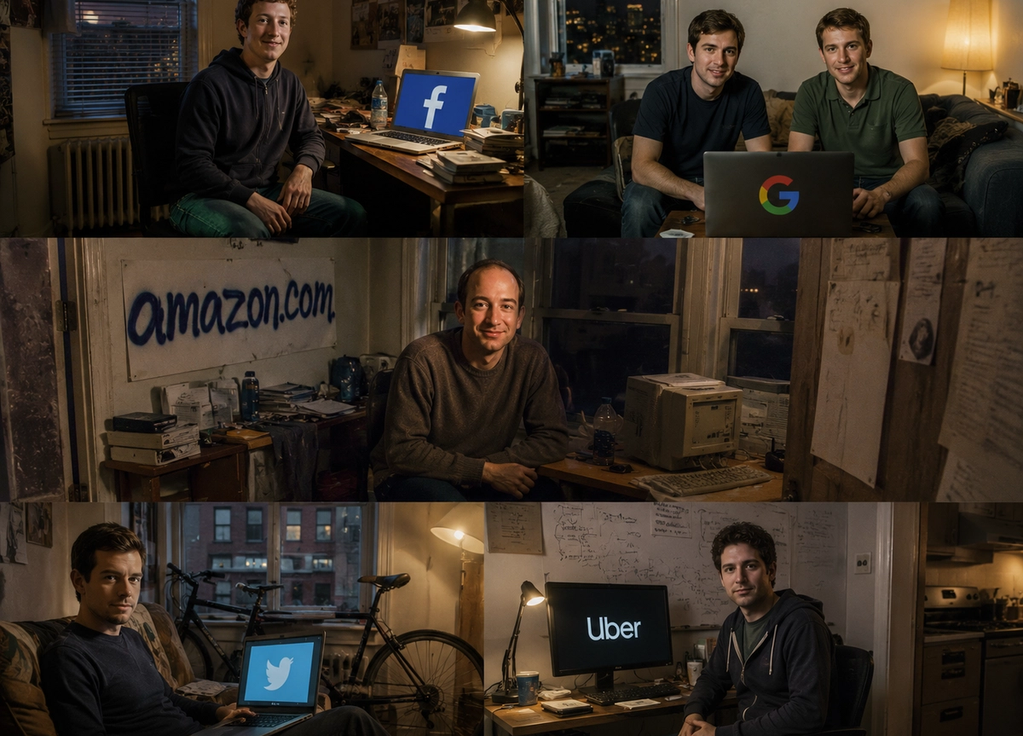
5 Billion-Dollar Companies That Started in Someone’s Apartment
Laurie Lucas
May 27, 2026
Some of the world’s biggest companies began in surprisingly ordinary places.
Before becoming global brands worth billions, many famous startups operated out of tiny apartments, cramped bedrooms, or shared living spaces with little money and uncertain futures. Founders often worked with limited resources, improvised offices, and ambitious ideas that initially sounded unrealistic to almost everyone around them.
These stories became powerful symbols of modern entrepreneurship because they show how massive companies sometimes grow from very small beginnings.
While not every startup becomes a billion-dollar success, some of today’s most influential businesses started with little more than laptops, creativity, and persistence inside modest apartments.
Key Takeaways
- Many major tech companies started with extremely limited resources
- Early founders often worked from apartments instead of offices
- Small beginnings did not prevent global success later
- Creativity and timing mattered as much as funding initially
- Startup culture helped romanticize “garage” and apartment origins
1. Amazon Started in Jeff Bezos’ Garage and Small Home Workspace
Before Amazon became one of the largest companies in the world, Jeff Bezos launched the business in 1994 while working from a modest house and garage setup in Seattle.
In the early days, Amazon operated primarily as an online bookstore. Bezos and a small team packed orders manually, built desks from inexpensive materials, and handled operations with limited resources while trying to grow the company slowly.
At the time, the idea of buying books online seemed uncertain to many people.
Today, Amazon dominates global e-commerce, cloud computing, streaming, logistics, and artificial intelligence, making its small startup origins feel almost unbelievable in hindsight.
2. Airbnb Began by Renting Air Mattresses in an Apartment
Airbnb’s origin story became one of Silicon Valley’s most famous examples of startup improvisation.
Founders Brian Chesky and Joe Gebbia struggled financially while living in a San Francisco apartment. To help pay rent during a conference that filled local hotels, they rented out air mattresses inside their apartment and offered guests breakfast.
That simple idea eventually evolved into Airbnb.
The founders initially faced rejection from investors who doubted strangers would feel comfortable staying inside other people’s homes. Today, Airbnb operates globally and transformed how millions of people travel and book accommodations.
3. Google Started in a Stanford Dorm and Small Shared Spaces
Google began when Larry Page and Sergey Brin developed a search engine project while studying at Stanford University.
In the earliest stages, the company operated from dorm rooms, apartments, and temporary shared workspaces before eventually moving into Susan Wojcicki’s garage. The founders focused heavily on creating better search technology at a time when internet navigation still felt chaotic and inefficient.
Their algorithm eventually revolutionized how people access information online.
What started as a student research project later became one of the most powerful companies in modern history, influencing advertising, smartphones, artificial intelligence, cloud computing, and global internet infrastructure.
4. Facebook Was Built From a College Dorm Room
Facebook famously began inside Mark Zuckerberg’s Harvard dorm room in 2004.
Initially created as a social networking platform for college students, the site spread rapidly across campuses before expanding worldwide. In the early days, the company operated with small teams working from temporary apartments and rented houses while trying to scale the platform quickly.
At first, few people imagined social media would eventually reshape communication globally.
Today, Meta owns Facebook, Instagram, and WhatsApp while influencing digital advertising, online culture, virtual reality, and billions of users worldwide.
5. Spanx Started From Sara Blakely’s Apartment
Not every billion-dollar startup began in traditional tech.
Sara Blakely founded Spanx while working as a salesperson and developing her product idea from her apartment with minimal startup capital. She handled early product development, packaging, and marketing herself while trying to convince manufacturers to take the idea seriously.
Blakely built the company without outside investors initially, which made her success especially unusual in the business world.
Spanx eventually became a billion-dollar brand and turned Blakely into one of the most successful self-made female entrepreneurs in the world.
Small Beginnings Became Part of Startup Mythology
Stories about billion-dollar companies starting in apartments or garages became deeply connected to startup culture itself.
These stories reinforce the idea that massive success can emerge from ordinary environments rather than corporate headquarters or enormous initial funding. The image of founders building companies from small apartments became symbolic of ambition, innovation, and entrepreneurial risk-taking.
In reality, however, many startups fail despite hard work and creative ideas.
The companies that succeed become famous partly because their small beginnings create powerful narratives people love remembering afterward.
Timing Often Matters as Much as the Idea
Many successful startups grew rapidly because they appeared at the right cultural and technological moment.
Amazon expanded alongside internet adoption. Airbnb benefited from digital travel culture and mobile apps. Facebook exploded during the rise of social networking. Google arrived when internet users desperately needed better search tools.
A strong idea alone is rarely enough.
Timing, market conditions, technology, persistence, and luck often play enormous roles in determining which startups eventually succeed globally.
Modern Entrepreneurship Romanticizes Hustle Culture
The stories of apartment startups also helped fuel modern hustle culture and entrepreneurial mythology.
Many people admire founders who built global businesses from tiny spaces because the stories symbolize independence, creativity, and possibility. But these narratives can sometimes oversimplify the reality of startup life, which often involves stress, financial instability, long hours, and significant uncertainty.
Success stories are inspiring partly because they are rare.
For every billion-dollar company that emerged from an apartment, countless other startups quietly disappeared.
Big Companies Often Begin in Ordinary Places
One of the most fascinating things about modern business is how often enormous companies begin with surprisingly humble origins.
Before becoming global corporations, many founders worked from small apartments, dorm rooms, garages, or temporary shared spaces while chasing ideas that initially seemed uncertain or unrealistic.
These beginnings remind people that massive industries and world-changing platforms do not always start inside giant office buildings.
Sometimes they begin with a few people, limited resources, and an idea developed in a cramped apartment that nobody else fully believed in yet.